by Sallyanne Keevers | Sep 15, 2025 | Women's Lives, Burnout & Boundaries
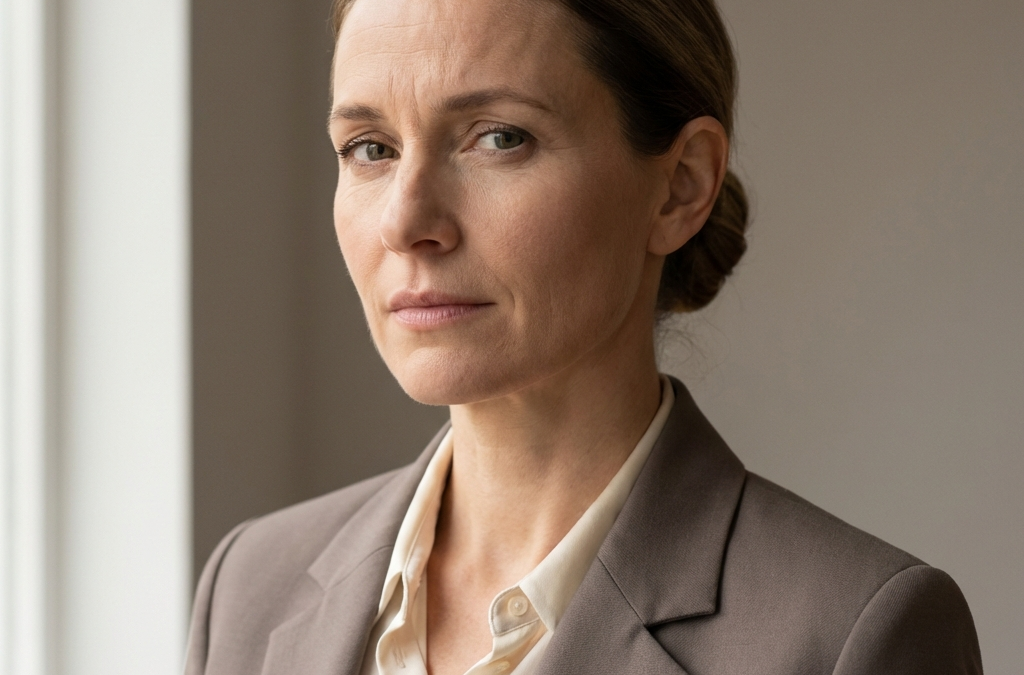
You look capable.
You manage a lot.
People rely on you.
On paper, your life works.
And yet inside there is a steady current of anxiety that never quite settles.
This is often referred to as high-functioning anxiety in women, a condition that many experience.
It sits in your chest.
Or in your stomach.
A hollow feeling.
Butterflies that are not pleasant.
You wake at night with your mind already running.
You are exhausted, but wired.
If you recognise this, you may also relate to the experience of feeling successful but persistently anxious.
If this sounds familiar, you are not alone.
This experience is often described as high-functioning anxiety. It is not a formal diagnosis. It is a pattern many high-achieving women recognise in themselves.
You function well.
You deliver.
You cope.
And you feel on edge most of the time.
Understanding High-Functioning Anxiety in Women
High-functioning anxiety does not always look dramatic.
- It often looks like:
- Overthinking every conversation.
- Replaying decisions long after they are made.
- Preparing for problems before they happen.
- Feeling responsible for keeping everything steady.
Physically, your body may feel tight or braced. Your shoulders hold tension. Your breath is shallow. There is a sense that you cannot fully exhale.
At night, your nervous system does not switch off. Even when nothing is wrong, your body does not feel safe enough to rest.
From the outside, you are composed.
Inside, you are constantly scanning.
Why Success Doesn’t Settle It
Many women assume that once they achieve enough, the anxiety will calm down.
When I get the promotion.
When the children are older.
When things are more stable.
But anxiety that developed early in life does not respond to external success alone.
For many capable women, achievement became a way to feel safe.
Being organised reduced criticism.
Being competent reduced conflict.
Being prepared prevented mistakes.
Your nervous system learned that performing well was protective.
So even when your life is objectively stable, your body may still be operating from an old blueprint.
Success does not automatically rewrite that blueprint.
Anxiety as a Protective Strategy
Anxiety is not a personal flaw.
In many cases, it began as a strategy.
Perhaps you grew up in an environment where being responsible was valued.
Perhaps you sensed instability and stepped into the capable role early.
Perhaps you were praised for achievement and learned that worth and performance were closely linked.
Over time, vigilance became familiar.
It helped you anticipate.
It helped you prepare.
It helped you excel.
The difficulty is that what once protected you can become exhausting when it never switches off.
High-functioning anxiety often reflects a nervous system that learned to stay alert in order to cope.
That makes sense.
It also has a cost.
The Cost of Always Being the Capable One
When you are the one who holds everything together, it can be hard to admit you are struggling.
You may minimise your distress because you are still functioning.
You may tell yourself you have no right to feel this way.
Meanwhile:
- Your body stays tense.
- Your sleep is disrupted.
- Your relationships may feel strained because you rarely let yourself soften.
Over time, the constant state of internal pressure can lead to burnout, emotional disconnection and a loss of joy.
You might look around at your life and think, why am I not enjoying this more?
What Actually Helps
High-functioning anxiety is rarely resolved by productivity hacks or surface-level coping tools alone.
It often requires something deeper.
Understanding the protective patterns that drive your anxiety.
Learning how your nervous system responds to stress.
Working gently with the parts of you that feel responsible for holding everything together.
Depth-oriented psychotherapy can help you become more Self-led rather than anxiety-led.
You can read more about how I work with high-functioning anxiety on my Services page.
That does not mean losing your ambition or competence.
It means developing an internal sense of safety that is not dependent on constant vigilance.
It means being able to rest without feeling exposed.
It means allowing success to feel less like survival and more like choice.
If you recognise yourself in this description, nothing has gone wrong.
Your system learned to cope well.
Now it may be time to learn how to feel safe without being permanently on edge.
Frequently Asked Questions
Is high-functioning anxiety a diagnosis?
No. It is not a formal clinical diagnosis. It is a commonly used description for anxiety that exists alongside competence and outward success.
Why do I feel anxious even when my life is stable?
Anxiety is not only triggered by current events. It can reflect long-standing nervous system patterns developed earlier in life. External stability does not automatically calm internal vigilance.
Can therapy help with high-functioning anxiety?
Yes. Therapy can help you understand the protective patterns driving your anxiety and develop a more settled internal state. Depth-oriented work often goes beyond symptom management and addresses underlying drivers.
Do I need to stop being ambitious to feel calmer?
No. The aim is not to reduce your capability. It is to reduce the internal pressure that makes everything feel urgent and high stakes.
Further reading on anxiety
If this resonates, you may also want to explore:
• Why Am I Successful but Still Anxious?
A deeper look at the tension between achievement and internal pressure.
• Why Do I Feel Anxious When Nothing Is Wrong?
Understanding anxiety that persists even when life looks stable.
• What Kind of Therapist Should I See for Anxiety in Australia?
How to choose the right kind of support.
• Is Online Therapy Effective for Anxiety?
What the research says about telehealth for anxiety treatment.
If you recognise yourself in these patterns, you do not have to keep managing them alone.
You can explore more about how I work, ask a question, or book a session when you feel ready.
The right support should feel steady, thoughtful, and collaborative.
Not sure yet whether therapy is right for you? You are welcome to book a free 15-minute chat.
If this feels familiar, the checklist below might help you see what you’ve been carrying.
Sallyanne Keevers is a PACFA Clinical Member and Registered Supervisor, and an ACA Level 2 Member and Registered Supervisor, based in Queensland, Australia. She specialises in IFS, Brainspotting, and trauma-informed depth psychotherapy for women, and offers clinical supervision for counsellors and psychotherapists. Sallyanne works exclusively online with women across Australia and internationally.

by Sallyanne Keevers | Sep 1, 2025 | Burnout & Boundaries, Women's Lives
You look capable.
You are capable.
You manage work.
You manage conversations.
You manage emotions.
You manage the atmosphere in a room before anyone else notices it has shifted.
And yet, you are tired in a way sleep does not fix.
This is not laziness.
It is not weakness.
It is not failure.
It is emotional labour.
And many women are carrying far more of it than they realise.
Understanding the concept of emotional labour for woman is crucial for recognising the unseen burdens many carry.
The Woman Who Holds Everything Together: Understanding Emotional Labour for Woman
You anticipate needs before they are spoken.
You soften your tone so someone else does not feel criticised.
You adjust your expectations so conflict does not escalate.
You remember birthdays, schedules, emotional triggers, unspoken tensions.
You track how everyone is coping.
You often become the stabiliser in relationships.
Over time, this can begin to feel automatic. Invisible. Expected.
But emotional labour is not abstract.
It is effort.
It is monitoring.
It is regulation.
And it requires energy.
When that energy is constantly flowing outward, exhaustion is not surprising.
Emotional Labour Is Not Just Emotional
Chronic emotional labour activates your nervous system.
When you are scanning for shifts in mood, anticipating reactions, or managing conflict before it surfaces, your body remains in a subtle state of vigilance.
It may not feel dramatic.
It can look like:
- A hollow sensation in your chest
- Butterflies that are not pleasant
- A low-grade sense of urgency
- Difficulty switching off at night
- Waking with thoughts already running
For many women, this pattern overlaps with what is often described as high-functioning anxiety in women.
Your nervous system learns that staying alert keeps things stable.
That adaptation may have been wise once.
But living in ongoing micro-vigilance is tiring.
Emotional exhaustion in women is often physiological as much as psychological.
If you’re unsure whether this kind of work translates online, you may find it helpful to read about whether online therapy is effective for anxiety.
The System You Live Within
This is not only personal.
Women are still socialised to:
- Be accommodating
- Be emotionally literate
- Maintain harmony
- Be responsible for relational wellbeing
Patriarchal structures and gender expectations have shaped this pattern across generations.
You may not consciously agree with those expectations.
And yet, they operate in workplaces, families, partnerships, and cultural messaging.
The invisible mental load is not imagined.
It is reinforced.
And it accumulates.
This does not mean you are powerless.
But it does mean your exhaustion makes sense.
When Competence Becomes a Burden
High-capacity women are often praised for being:
- Reliable
- Mature
- Responsible
- Emotionally intelligent
You may have learned early that being the capable one kept things steady.
You may have been “the strong one” in your family.
You may feel safest when you are useful.
Over time, usefulness can quietly become identity.
And when your identity rests on holding everything together, letting go can feel unsafe.
This is where relational burnout begins.
Not from failure.
From over-functioning.
The Quiet Resentment No One Sees
Emotional labour without recognition can turn into:
- Irritability
- Withdrawal
- Loss of desire
- A sense of invisibility
- Sudden tears that surprise you
You may feel guilty for wanting less responsibility.
You may minimise your own needs because others “have it harder.”
But depletion is depletion.
And resentment is often a signal that your system is overextended.
What Healing Actually Looks Like
Healing does not mean becoming less capable.
It means redistributing responsibility.
It means learning to tolerate:
- Someone else’s discomfort
- Not fixing immediately
- Not anticipating every outcome
- Allowing others to regulate themselves
It means helping your nervous system learn that stability does not depend solely on you.
This work is relational.
It is gradual.
It is deeply hopeful.
Because capacity does not need to disappear.
It simply needs balance.
Where Therapy Can Help
Many women wonder whether support needs to be in person. Online therapy for women can be a steady and effective way to do this work.
In therapy, we explore:
- The origins of your over-functioning
- The beliefs that keep you responsible for everyone
- The protective strategies behind anxiety
- How your nervous system learned vigilance
- We work gently.
Without pathologising.
Without blaming you for adapting.
The aim is not to remove your competence.
It is to support you in being resourced, sovereign, and emotionally steady, without carrying the entire system alone.
If you would like to understand more about how I work, you can read about my services here.
A Question to Sit With
If you stopped holding everything together for a moment, what are you afraid would happen?
And who would you be if stability did not depend entirely on you?
Frequently Asked Questions
What is emotional labour in women?
Emotional labour in women refers to the often invisible work of managing emotions, maintaining harmony, anticipating needs, and stabilising relationships. It is effortful, even when it looks natural from the outside.
Why am I so tired emotionally all the time?
Emotional exhaustion can develop when you are constantly monitoring, anticipating, or regulating the emotional climate around you. Over time, this keeps your nervous system activated and drains energy.
Is emotional labour the same as burnout?
Not exactly. Burnout often relates to work demands. Emotional labour can occur in workplaces, families, friendships, and intimate relationships. The two frequently overlap.
Can therapy help with emotional exhaustion?
Therapy can help you understand the patterns that keep you over-responsible, support nervous system regulation, and redistribute relational load so you are not carrying everything alone.
If This Resonates
If you recognise yourself in this pattern, you do not have to keep carrying it alone.
You can read more about how I work on my Services page.
If you have a question before booking, you’re welcome to get in touch.
Or, if you feel ready, you can book a session here.
Emotional labour often feels invisible.
What would change if your needs were given the same care you so consistently offer others?
Not sure yet whether therapy is right for you? You are welcome to book a free 15-minute chat.
If this feels familiar, the checklist below might help you see what you’ve been carrying.
Sallyanne Keevers is a PACFA Clinical Member and Registered Supervisor, and an ACA Level 2 Member and Registered Supervisor, based in Queensland, Australia. She specialises in IFS, Brainspotting, and trauma-informed depth psychotherapy for women, and offers clinical supervision for counsellors and psychotherapists. Sallyanne works exclusively online with women across Australia and internationally.

by Sallyanne Keevers | Aug 14, 2025 | Women's Lives, Burnout & Boundaries
Why do I feel anxious when nothing is wrong?
It’s a question many capable, thoughtful women ask themselves.
If you’ve been wondering, “Why do I feel anxious when nothing is wrong?” you’re not alone.
You might look around your life and think:
Nothing is actually wrong.
Your work is steady.
Your relationships are intact.
You’re functioning well.
And yet, your chest feels tight.
Your mind won’t switch off.
You feel a low hum of unease that doesn’t match the facts.
Many high-functioning women experience anxiety that doesn’t seem to have a clear external cause.
So what’s actually happening?
Why Do I Feel Anxious When Nothing Is Wrong?
Anxiety is not always a reaction to what is happening now.
Sometimes it is a response to:
-
Chronic over-responsibility
-
Unprocessed stress
-
Long-term pressure to perform
-
A nervous system that has been “on” for too long
When your body has learned to stay alert, it does not easily stand down just because circumstances improve.
High Competence Can Mask Internal Strain
Women who are capable and reliable often override early signs of exhaustion.
You might:
Over time, your nervous system may begin to signal distress in the only way it knows how: anxiety.
Not because you’re failing.
But because something inside has been carrying too much.
When Nothing Is “Wrong”, Look Inward
If there is no obvious crisis, it may help to ask:
-
Where do I feel responsible for more than is mine?
-
When do I actually rest without guilt?
-
What feelings am I postponing because they feel inconvenient?
-
Have I felt this way before in other seasons of pressure?
Anxiety without a clear trigger often points to patterns rather than events.
You might describe it as unexplained anxiety, anxiety without a trigger, or feeling anxious for no reason. Often, it is not that nothing is wrong, but that something internal has been under strain for longer than you realised.
Beyond Blue’s information on women’s mental health explains how sustained stress and internal pressure can contribute to anxiety, even when life appears stable on the surface.
What Can Help?
Small shifts matter.
You might begin by:
-
Reducing one unnecessary responsibility
-
Protecting uninterrupted recovery time
-
Noticing where you over-function in relationships
-
Working gently with the part of you that believes it must always cope
For some women, having structured space to explore these patterns makes a significant difference.
Not to eliminate anxiety overnight, but to understand what it is signalling beneath the surface.
If you relate to this experience, you may find it helpful to read my in-depth guide on High-Functioning Anxiety in Women: Why You’re Successful but Always On Edge, where I explore the deeper drivers behind constant internal pressure.
If you’re curious about how this kind of work unfolds in practice, you can read more about my approach to therapy here.
You Don’t Have to Untangle This Alone
If you keep asking yourself, “Why do I feel anxious when nothing is wrong?”, it may be less about eliminating anxiety and more about understanding what is asking for your attention.
If anxiety feels persistent, intrusive, or quietly shaping your decisions, working with a therapist can help you explore the deeper pattern rather than just managing symptoms.
You’re welcome to begin with a 90-minute session, or with a free 15-minute chat if you’d like to see whether this work feels right first.
Frequently Asked Questions
Can you have anxiety even if life is good?
Yes. Anxiety can be driven by internal pressure, long-term stress patterns, or a nervous system that has learned to stay alert.
Why do high-achieving women experience anxiety?
High responsibility, emotional labour, and chronic self-expectation can quietly strain the nervous system over time.
Is anxiety without a cause a sign something is wrong?
Not necessarily. It may be a sign that something has been sustained for too long internally rather than an immediate external threat.
When Insight Needs More Space
Sometimes persistent, unexplained anxiety is not resolved through surface insight alone. It may require extended space to trace the pattern carefully and work with it in depth.
Longer 90-minute sessions give us room to explore a specific relational pattern, life transition, or internal dynamic with care, and an eight-session commitment holds that work steadily over time.
You can learn more about 90-minute sessions and the eight-session commitment here.
If you’d like to explore whether this is a fit, you can read more about my services or ask a question.
What would help you feel confident about choosing the right kind of support for your anxiety?
Not sure yet whether therapy is right for you? You are welcome to book a free 15-minute chat.
If you recognise yourself in this, the checklist below might help you see what you’ve been carrying.
Sallyanne Keevers is a PACFA Clinical Member and Registered Supervisor, and an ACA Level 2 Member and Registered Supervisor, based in Queensland, Australia. She specialises in IFS, Brainspotting, and trauma-informed depth psychotherapy for women, and offers clinical supervision for counsellors and psychotherapists. Sallyanne works exclusively online with women across Australia and internationally.

by Sallyanne Keevers | Jun 15, 2025 | Burnout & Boundaries, Women's Lives
Why Am I Successful but Still Anxious?
On paper, everything looks fine.
You are competent.
You are trusted.
You deliver.
And yet, underneath that competence, there is a steady undercurrent of anxiety.
You might find yourself asking:
Why am I successful but still anxious?
You meet deadlines.
You manage relationships.
You appear calm and capable.
But your chest feels tight.
Your mind doesn’t switch off.
Rest feels uncomfortable.
If this sounds familiar, you are not alone.
Many high-achieving women experience anxiety that doesn’t match their circumstances.
When Success Doesn’t Quiet the Nervous System
Success does not automatically calm the body.
For many women, anxiety developed long before achievement arrived.
If your nervous system learned to stay alert in earlier seasons of pressure, responsibility, or relational instability, it may continue scanning for threat even when life stabilises.
You may look around and think:
Nothing is actually wrong.
And yet your body feels as though something is.
This is often described as high-functioning anxiety: anxiety that exists alongside competence and capability. It is not a formal diagnosis, but it reflects a lived experience many successful women recognise.
Anxiety is common among Australian women, particularly those carrying high levels of responsibility, as reflected in national mental health data from the Australian Institute of Health and Welfare.
Feeling anxious despite success does not mean you are ungrateful or broken. It often means your system has been “on” for a long time.
The Hidden Cost of Being the Reliable One
If you are known as competent, you often become the one others depend on.
Over time, that identity can harden into expectation.
You might notice:
- Difficulty resting without guilt
- An inability to delegate
- Hyper-awareness of mistakes
- A quiet fear of disappointing others
- Reluctance to show vulnerability
Anxiety in this context is rarely random.
It can be the internal cost of sustained over-responsibility.
High-achieving women often carry invisible emotional labour. You anticipate problems. You smooth tensions. You prepare thoroughly. You hold things together.
From the outside, this looks like strength.
Inside, it can feel like pressure.
Why High-Achieving Women Feel Anxious
When women ask, “Why am I successful but still anxious?”, the answer is rarely about weakness.
It is often about adaptation.
At some point, being vigilant, responsible, or self-reliant may have served you.
You may have learned:
- It is safer to stay ahead
- It is better to exceed expectations
- It is risky to slow down
- My value comes from what I produce
Over time, those beliefs become embodied.
Your nervous system does not easily distinguish between real threat and perceived expectation.
So even when life is objectively stable, your body remains prepared.
This is why anxiety can persist even when nothing appears wrong.
When Anxiety Doesn’t Match Your Circumstances
You might notice:
You feel tense during calm periods.
You overthink minor interactions.
You replay conversations long after they end.
You feel uneasy during downtime.
This experience is sometimes labelled “high-functioning anxiety,” but the label matters less than understanding the pattern.
If anxiety continues despite success, it may be worth asking:
Where did I learn that I must always hold it together?
What happens internally when I slow down?
Who would I be without this level of responsibility?
You might also recognise this from asking yourself why do I feel anxious when nothing is wrong.
Anxiety is often protective.
It may be trying to prevent failure, rejection, or loss of control.
Understanding that pattern tends to be more helpful than trying to silence it.
What Can Help When You Feel Successful but Anxious
Small shifts matter.
You might begin by:
- Reducing one unnecessary responsibility
- Protecting genuine recovery time
- Noticing where you over-function in relationships
- Allowing yourself to be less than perfect in low-risk situations
For some women, insight alone brings relief.
For others, anxiety remains until the deeper relational pattern is explored.
If you are curious about how this kind of work unfolds in practice, you can read more about my approach to therapy here.
When Insight Needs More Space
Sometimes persistent anxiety beneath success is not resolved through surface strategies.
It may require extended space to explore:
- The role you learned to play
- The expectations you internalised
- The part of you that believes everything depends on you
Weekly sessions can support this process.
For women ready to commit to deeper work, an eight-session commitment creates steady, focused space to trace the pattern carefully and begin shifting it.
You can learn more about 90-minute sessions and the eight-session commitment here.
Frequently Asked Questions
Can you be successful and still anxious?
Yes. Success does not prevent anxiety. For many women, anxiety developed in response to earlier pressure or responsibility and can persist even when life appears stable.
Why do high-achieving women feel anxious?
High responsibility, perfectionism, and chronic self-expectation can keep the nervous system activated long-term. Anxiety often reflects sustained internal pressure rather than current failure.
Is high-functioning anxiety a diagnosis?
The term is commonly used to describe anxiety in people who appear outwardly successful. It is not a formal clinical diagnosis, but it reflects a real and common lived experience.
Why can’t I relax even when everything is fine?
If your nervous system has been conditioned to stay alert, it may struggle to switch off automatically. Relaxation can feel unfamiliar or even unsafe until deeper patterns are understood.
If you keep asking yourself, “Why am I successful but still anxious?”, it may not be about eliminating anxiety. It may be about understanding what is asking for your attention.
You don’t have to untangle it alone.
If you’d like to explore whether this is a fit, you can read more about my services or ask a question.
What would help you feel confident about choosing the right kind of support for your anxiety?
If you relate to this experience, you may find it helpful to read my in-depth guide on High-Functioning Anxiety in Women: Why You’re Successful but Always On Edge, where I explore the deeper drivers behind constant internal pressure.
Not sure yet whether therapy is right for you? You are welcome to book a free 15-minute chat, or ask me a question.
If you recognise yourself in this, the checklist below might help you see what you’ve been carrying.
Sallyanne Keevers is a PACFA Clinical Member and Registered Supervisor, and an ACA Level 2 Member and Registered Supervisor, based in Queensland, Australia. She specialises in IFS, Brainspotting, and trauma-informed depth psychotherapy for women, and offers clinical supervision for counsellors and psychotherapists. Sallyanne works exclusively online with women across Australia and internationally.

by Sallyanne Keevers | Apr 29, 2025 | Burnout & Boundaries, Women's Lives
The invisible mental load for women is the quiet, constant work of remembering, anticipating, tracking, and emotionally holding that keeps life functioning.
It is not dramatic.
It is rarely acknowledged.
And it is exhausting.
If you often feel responsible for everything, even when no one has explicitly asked you to be, you may be carrying an invisible mental load that never truly switches off.
What Is the Invisible Mental Load?
The invisible mental load includes:
• Remembering appointments
• Tracking children’s schedules
• Monitoring emotional shifts in a partner
• Anticipating problems before they surface
• Planning ahead so nothing falls apart
• Holding everyone’s preferences in mind
It is not just doing tasks.
It is thinking about tasks.
It is the cognitive and emotional vigilance that runs in the background of your day.
Because it happens internally, it is often unseen.
The invisible mental load overlaps with emotional labour.
Emotional labour involves managing feelings, smoothing tension, and maintaining relational stability. The invisible mental load includes the thinking and anticipating that supports that work.
Over time, one person can become the emotional and organisational centre of gravity in a relationship.
This is where the invisible mental load and emotional labour quietly merge. One person becomes responsible not only for what gets done, but for how everyone feels while it’s happening.
If this dynamic feels familiar, you may want to read my in-depth guide on Emotional Labour and the Exhausted Woman, where I explore how holding everything together becomes draining over time.
Why the Invisible Mental Load Feels So Heavy
The invisible mental load for women is not just psychological.
When you are constantly anticipating needs and monitoring for problems, your nervous system remains in subtle activation.
You may notice:
• Difficulty switching off at night
• A hollow or tense feeling in your chest
• Irritability you can’t explain
• A sense of urgency even when nothing is wrong
• Emotional tiredness that sleep does not fix
Chronic micro-vigilance keeps your body slightly alert.
Over time, that alertness becomes exhausting.
The load is invisible, but the physiological cost is real.
Why Women Often Carry More of It
This pattern does not develop in isolation.
Women are still more likely to:
• Coordinate family schedules
• Track emotional wellbeing
• Maintain harmony
• Notice relational shifts
• Be the reliable one
Gender conditioning and systemic expectations shape this dynamic.
This is not about blame.
It is about context.
When the invisible mental load is expected rather than shared, emotional exhaustion makes sense.
When the Invisible Mental Load Leads to Anxiety
Carrying the invisible mental load can overlap with high-functioning anxiety in women.
Constant anticipation keeps your system prepared.
Prepared to fix.
Prepared to respond.
Prepared to stabilise.
Over time, this can feel like internal pressure that never fully settles.
If you recognise this pattern, you may also relate to high-functioning anxiety in women.
Can the Invisible Mental Load Be Shared?
Yes.
But it requires:
• Naming it clearly
• Valuing it
• Redistributing responsibility
• Allowing others to feel their own discomfort
This is relational work.
It is gradual.
And it is possible.
Frequently Asked Questions
What is the invisible mental load for women?
The invisible mental load for women refers to the ongoing cognitive and emotional responsibility of planning, remembering, anticipating needs, and maintaining relational stability.
Is the invisible mental load the same as emotional labour?
They overlap. Emotional labour focuses on managing feelings and harmony. The invisible mental load includes the cognitive tracking and anticipation behind that work.
Why does the mental load cause emotional exhaustion?
Constant anticipation and monitoring keep the nervous system activated. Over time, this subtle vigilance drains emotional energy.
How do I stop carrying the mental load alone?
The first step is recognising and naming it. From there, small relational shifts and clearer boundaries can gradually redistribute responsibility.
If This Resonates
If you recognise yourself in this pattern, you do not have to keep carrying it alone.
You can read more about how I work on my Services page.
If you have a question before booking, you’re welcome to get in touch.
Or, if you feel ready, you can book a session here.
What would change if responsibility did not automatically default to you?
Not sure yet whether therapy is right for you? You are welcome to book a free 15-minute chat.
If this feels familiar, the checklist below might help you see what you’ve been carrying.
Sallyanne Keevers is a PACFA Clinical Member and Registered Supervisor, and an ACA Level 2 Member and Registered Supervisor, based in Queensland, Australia. She specialises in IFS, Brainspotting, and trauma-informed depth psychotherapy for women, and offers clinical supervision for counsellors and psychotherapists. Sallyanne works exclusively online with women across Australia and internationally.