

Finding yourself outside family narratives is one of the most disorienting and most significant things a woman can do. Not because the family was necessarily bad (though it may have been) but because so much of how we understand ourselves is built inside that system. The roles we played, the needs we learned to suppress, the version of ourselves that existed in relation to everyone else. When the family system changes, through distance, estrangement, or simply the decision to stop playing the assigned role, the question that remains is both simple and enormous: who am I, when I am not that?
This post explores what finding yourself outside the family narrative actually involves: the disorientation of it, the identity work it requires, and what becomes genuinely available on the other side.
What the Family Narrative Actually Is
Every family has a narrative: a shared story about who each member is, what roles they play, what is valued, what is permissible, and what is not. These narratives are rarely made explicit. They are transmitted through what is praised and what is criticised, through what is spoken about and what is not, through the emotional atmosphere of the household and the patterns of how people relate.
Within the family narrative, each person occupies a role. The capable one. The difficult one. The one who holds things together. The peacekeeper. The achiever. The one who needs managing. These roles are often assigned before the person has any conscious awareness of them, certainly before they have any choice about whether to accept them.
The role shapes identity in profound ways. Not only how others see you, but how you see yourself: what you believe you are capable of, what you believe you deserve, what you believe you are allowed to want or feel or be. By the time a person reaches adulthood, the family narrative and the sense of self are so interwoven that separating them can feel almost impossible.
What Finding Yourself Outside Family Actually Involves
Dr Jonice Webb, a psychologist and pioneer in the field of Childhood Emotional Neglect, has written extensively about how many people are raised to ignore, hide, or be ashamed of their emotional needs, often by well-meaning parents who were themselves not given the emotional attunement they needed. The result, as Dr Webb describes it, is that the adult comes to believe they have no emotional needs at all. Not because they do not have them, but because they were taught to suppress them so thoroughly that they became invisible.
Finding yourself outside family, in this context, means reconnecting with the inner life that the family system did not have space for. The feelings that were not welcome. The needs that were learned to be inconvenient. The preferences, values, and ways of being that were never explored because the role did not include them.
This is not a straightforward process. It is disorienting, particularly in the early stages, because the familiar scaffolding of the family role is no longer providing structure. Many women describe a period of not knowing what they think, what they feel, or what they want, as if the removal of the role has revealed an emptiness where a self was supposed to be.
That emptiness is not absence. It is space: the space in which something genuinely your own can begin to form.
The Specific Challenge for Women
Women carry a particular version of this challenge. The roles assigned within family systems (the caretaker, the peacekeeper, the emotionally responsible one, the one who puts others first) are also the roles that broader culture reinforces and rewards. The woman who has been playing these roles within her family has likely been playing versions of them everywhere.
This means that finding yourself outside the family narrative is not just about the family. It is about disentangling from a much larger set of expectations about what women are for, what they owe, and what they are allowed to prioritise. The family is often where it started, but it has been reinforced for a lifetime.
It also means that the first steps toward a self that is genuinely your own can feel transgressive, as if you are doing something wrong by prioritising your own experience, your own needs, your own development. That feeling is worth noticing and naming. It is the old learning speaking. It does not mean you are actually doing anything wrong.
What Finding Yourself Outside Family Looks Like in Practice
The identity work of finding yourself outside the family narrative is not dramatic. It does not happen in a single breakthrough. It accumulates in small, honest moments.
It looks like pausing before automatically agreeing and asking yourself what you actually think. It looks like noticing what you feel in your body before deciding what you are supposed to feel. It looks like making a small choice (where to eat, how to spend an afternoon, what to say in a conversation) based on what you actually want rather than what will cause the least disruption.
It also looks like sitting with discomfort. The guilt of not meeting expectations. The anxiety of not knowing what you think without the family narrative to tell you. The strangeness of an inner world that is genuinely your own rather than one shaped by and for others.
And over time it looks like something gradually becoming clearer: a sense of self that is more solid, more genuinely yours, less contingent on what others need you to be.
Finding Yourself Outside Family Through Inner Work
This is the territory where depth-oriented therapy does its most significant work. Not by telling you who to be, but by creating the conditions in which you can find out.
IFS is particularly well suited to this process because it approaches the inner world as a system of parts, each with its own role, its own history, its own perspective. The part that keeps the peace, the part that manages everyone else’s feelings, the part that does not know what it wants, the part that is exhausted from performing. Each of these formed in response to the family system and has been running its programme ever since.
Building relationship with these parts, understanding what they have been protecting, what they fear would happen if they stopped, and what they might be like if they were no longer needed to play their roles, is the process through which the Self that was always there, beneath the roles, becomes more accessible.
Dr Webb writes that just as a person was separated from their feelings in childhood, they can reconnect with them now. That reconnection is not a return to something lost. It is the building of something that was never fully allowed to exist. And it is available at any age, in any circumstance, regardless of what the family narrative has said about who you are.
What Becomes Possible
Women who do this work describe a particular quality of change that is difficult to name precisely. It is not that life becomes easier or that the old patterns disappear entirely. It is that there is more of them available to meet whatever comes.
A greater capacity to know what they actually feel. A clearer sense of what they actually want. Relationships that feel more genuine because they are being entered from a more genuine place. Decisions made from a grounded centre rather than from obligation, fear, or the need to maintain a role.
And perhaps most significantly: a sense of being at home in themselves, not perfectly or permanently, but more reliably than before. A self that is genuinely their own, shaped by their own experience and their own choices rather than entirely by the narrative they were handed.
Frequently Asked Questions
Why do I not know who I am outside of my family?
When a family system does not support the development of an individual self, when emotional needs are not responded to, when roles are assigned rather than chosen, when the family narrative overrides personal experience, it becomes very difficult to develop a clear sense of who you actually are. This is not a personal failing. It is a predictable outcome of a particular kind of upbringing. Identity can be built, at any age, from the inside out.
Is it normal to feel lost after distancing from family?
Yes, and it is one of the least-discussed aspects of family estrangement. When significant distance is created from the family system, the roles, expectations, and sense of self organised around that system can become disorienting. Feeling lost is not a sign that the distance was wrong. It is a sign that the identity work has begun.
How do I start to find out who I am outside my family?
The starting point is usually not a grand discovery but a series of small, honest questions. What do I actually feel right now, separate from what I am supposed to feel? What do I want, when I am not managing anyone else’s expectations? What do I notice I enjoy or value when nobody is watching? Building identity from the inside out is gradual work, and therapy that works with the inner world directly tends to support that process most effectively.
Can therapy help me find my identity outside my family?
Yes. Depth-oriented therapy (particularly IFS, which works directly with the inner parts of the self) is well suited to this kind of identity work. IFS helps you understand the parts that formed in the family system, what roles they were given, what they have been protecting, and what they might be like when they are no longer needed to play those roles. The goal is not to become someone different. It is to access more of who you actually are.
You Are More Than the Role You Were Given
If you have spent most of your life playing a role in your family of origin and are beginning to wonder who you are outside of it, that question is one of the most important you will ever ask. I work exclusively with women, fully online, using IFS and depth-oriented therapy to support exactly this kind of inner work.
You can read more about how I work on my approach page. When you are ready, get in touch directly to ask a question or enquire about availability. I aim to respond to all enquiries within two business days.
The self that was always there, beneath the role, is still there. And it has been waiting.
Further Reading
- Family Estrangement: When Distance Becomes Necessary and What Comes Next
- Toxic Family Dynamics: Recognising the Patterns That Have Shaped You
- Small T Trauma: The Wounds That Are Hard to Name
- IFS Therapy in Australia: A Guide for Women Who Are Ready to Go Deeper
- When Self-Awareness Is Not Enough: How IFS Therapy Goes Deeper
- Estranged from Adult Child: How to Grow Through This Without Blame
Not sure yet whether therapy is right for you? You are welcome to book a free 15-minute chat, or ask me a question.
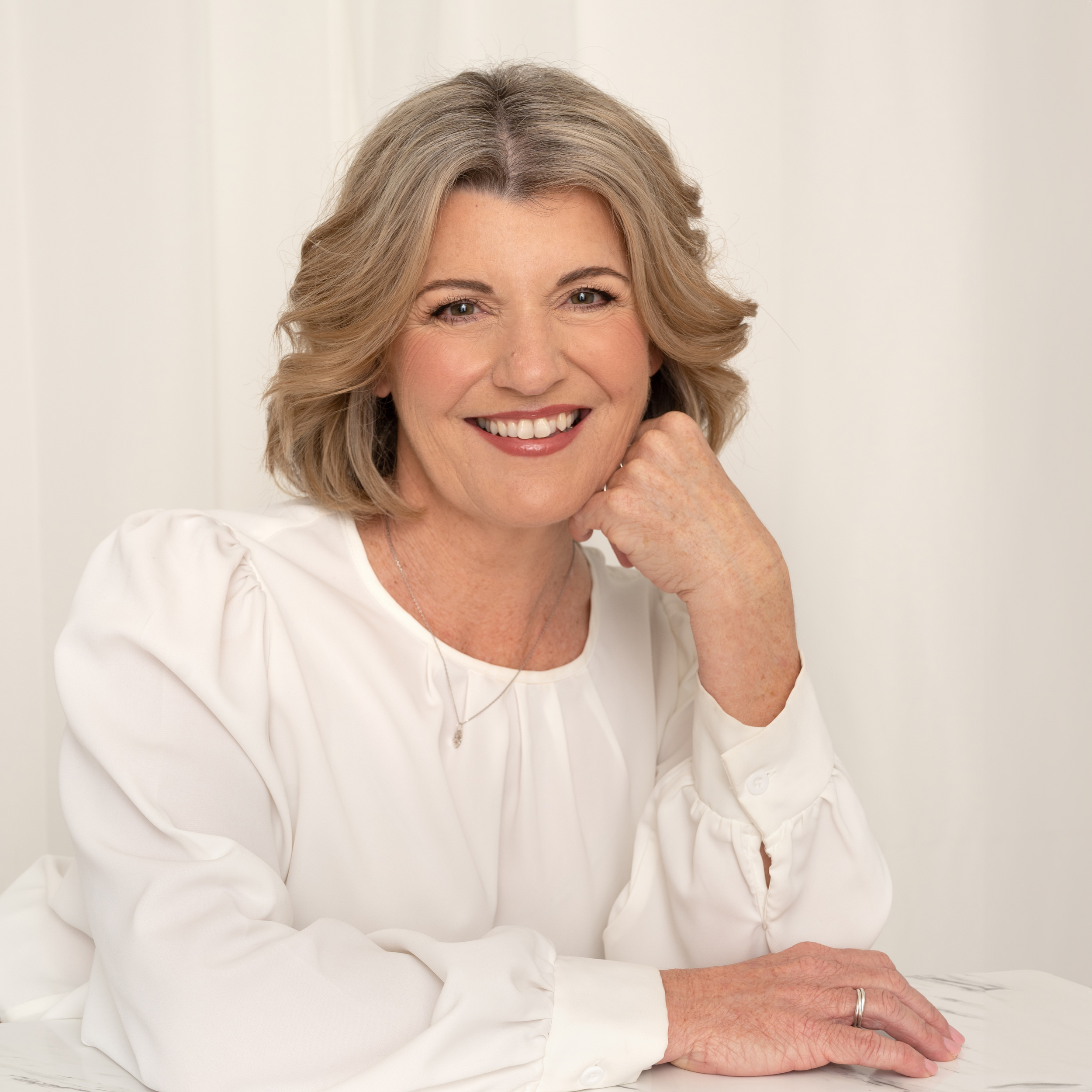
Sallyanne Keevers is a PACFA Clinical Member and Registered Supervisor, and an ACA Level 2 Member and Registered Supervisor, based in Queensland, Australia. She specialises in IFS, Brainspotting, and trauma-informed depth psychotherapy for women, and offers clinical supervision for counsellors and psychotherapists. Sallyanne works exclusively online with women across Australia and internationally.