

Family estrangement is one of the most painful and least spoken-about experiences a woman can navigate. Not because it is rare (it is far more common than most people realise) but because the silence around it is enormous. The cultural expectation that family comes first, that blood is thicker than water, that whatever the difficulty you find a way to stay connected, sits heavily on women who are trying to make sense of why distance has become necessary.
This post is not going to tell you what to do. That is not its purpose and it is not my place. What I want to offer instead is a clear, honest account of what family estrangement actually involves: the different forms it takes, why it happens, what the guilt and grief of it feel like, and what the path forward might look like depending on what you need.
Because the path forward is not the same for every woman. For some, distance is temporary: a breathing space that creates conditions for healing that were not possible while in ongoing contact. For some, distance becomes permanent, and that is a legitimate choice that does not require justification. And for some, staying in contact is what they choose, and the work is about getting clear on what they will and will not participate in, so they can remain in relationship without continuing to lose themselves.
All three are valid. This post holds space for all of them.
What Family Estrangement Actually Is
Family estrangement refers to a significant reduction or complete cessation of contact with one or more family members, driven by the choices of at least one person in the relationship. It can involve parents, siblings, extended family, or the family of origin as a whole. It can be mutual or unilateral. It can happen gradually or suddenly. And it can be revisited, adjusted, or changed at any point.
What it almost always involves is a period of significant pain: not just the pain of the distance itself, but the pain of what made the distance feel necessary. Women who create distance from family members rarely do so lightly. They do so because something in the relationship has become incompatible with their wellbeing, their healing, or their sense of self, and because other attempts to manage that have not been sufficient.
Research suggests that family estrangement is significantly more common than cultural narratives imply. A 2021 study by the University of Exeter found that in the UK, one in five families is affected by estrangement. Australian data is more limited but the pattern appears consistent. The silence around it is cultural, not statistical.
What Family Estrangement Is Not
Family estrangement is not a failure of love or loyalty. It is not proof that something is fundamentally wrong with you or your family. It is not an overreaction, a phase, or evidence of a personality problem. And it is not irreversible unless you decide it is.
It is also not something that requires a clear villain. Many women struggle to name family estrangement as a legitimate response to their experience because what happened was not obviously abusive. It was the accumulation of patterns, the chronic experience of not being seen, the exhaustion of managing dynamics that consistently cost more than they gave. Those experiences are real and their impact is real, regardless of whether they meet someone else’s threshold for serious enough.
It is also not a decision that has to be explained or justified to anyone outside the relationship. You are the only one who knows the full texture of what you have been navigating.
Why Distance Sometimes Becomes Necessary
Distance becomes necessary when ongoing contact makes healing impossible: when the patterns that caused harm are still active, when being in the relationship requires a level of self-suppression that has become unsustainable, or when the cost of contact consistently outweighs what it gives.
For women who have experienced complex or relational trauma within the family system, ongoing contact can mean ongoing exposure to the very dynamics that shaped the patterns they are trying to heal. Healing requires some degree of safety: the physiological and relational conditions in which the nervous system can begin to update what it learned. When those conditions are not available within the relationship, distance can create them.
This does not mean distance is always the answer, or that it needs to be permanent. It means that for some women, at some points in their healing, creating space is the most self-respecting thing they can do.
The Three Paths, and Why All of Them Are Valid
Temporary distance
Some women need a period of distance to create the conditions for healing: to find out who they are outside the family narrative, to process what the relationship has cost them, to develop the inner resources that make re-engagement possible on different terms. Distance here is not an ending. It is a breathing space. The possibility of reinstating contact remains open, and the woman revisits that possibility when and if she feels ready.
Permanent estrangement
For some women, the assessment over time is that reinstating contact is not something they want or that serves their wellbeing. That is a legitimate conclusion that does not require defending. It does not mean the family member is necessarily a bad person. It means the relationship, as it has existed, has not been compatible with this woman’s ability to live well, and she has decided to prioritise that.
Staying in contact and healing within the relationship
Some women choose to remain in contact, because the relationship has genuine value, because complete distance does not feel right, or because the family member is also doing their own work. Staying in contact does not mean accepting everything. It means getting very clear about what you will and will not participate in. A boundary in this context is not a rule you impose on another person. It is a decision about your own behaviour. What will you engage with? What will you step back from? What do you need in order to remain in this relationship without continuing to lose yourself?
This path requires a strong and clear sense of self, which is itself something therapy can support. It is not a lesser choice than distance. It is a different one, with its own challenges and its own genuine possibilities.
What Makes Family Estrangement So Hard
Several things make navigating family estrangement particularly difficult for women.
The guilt is enormous and persistent. We are culturally conditioned to prioritise family loyalty, to keep the peace, to find a way. When we create distance, the guilt does not wait for permission. It arrives immediately and tends to stay. Guilt in this context does not mean you have done something wrong. It means you are doing something that conflicts with a deeply held expectation, often one that was placed on you long before you had any say in the matter.
The grief is also real, and often complicated by the fact that the people you are grieving are still alive. You can grieve the relationship you needed and did not have. The parent who was not able to see you. The family that did not feel safe. The belonging you hoped for and could not find. This is genuine loss and it deserves to be named as such.
The identity disruption is significant too. Much of how we understand ourselves is shaped by our family of origin: the roles we played, the narratives we were given, the version of ourselves that existed in that system. Creating distance means having to find out who you are outside of all of that. That process is disorienting and also, eventually, one of the most significant things a person can do.
How Therapy Helps with Family Estrangement
Therapy does not tell you what to do about your family. What it does is help you get clear enough inside yourself to make decisions from a grounded place rather than from fear, obligation, or the parts of you that are still responding to the past.
IFS is particularly well suited to this work because it helps you understand the different parts of yourself that are showing up in relation to family: the part that feels guilty, the part that is furious, the part that still longs for the connection it never had, the part that is exhausted, the part that is scared of getting it wrong. Each of these parts has something important to offer. Understanding them changes the nature of the decisions you make.
Therapy also helps with the grief and the identity work: making sense of what the family relationship has cost you, processing the pain of it at the level where it is actually held, and beginning to build a sense of self that is genuinely your own rather than the one assigned to you.
Frequently Asked Questions About Family Estrangement
Is family estrangement normal?
Family estrangement is more common than most people realise: research suggests that in Australia and other Western countries, a significant proportion of adults are estranged from at least one family member. The silence around it makes it feel more isolating than it is. It is not a sign that something is wrong with you. It is a response to circumstances that required it.
Does family estrangement have to be permanent?
No. Distance can be temporary: a breathing space that creates the conditions for healing without ongoing interference. Some women find that once they have healed sufficiently, exploring reinstated contact feels right. Others find that continued distance remains what they need. Neither outcome is more valid than the other. The decision belongs entirely to you, and it can change.
What if I want to stay in contact with my family but still protect myself?
Staying in contact does not mean accepting everything. It means getting clear on what you will and will not participate in: the interactions you will engage with and those you will step back from. This is about your own choices and behaviour, not about telling others what to do. Healing within a family relationship is genuinely possible, though it requires a clear sense of self and what you need.
How do I stop feeling guilty about distancing from my family?
Guilt is one of the most consistent experiences for women who create distance from family, and it makes complete sense given how deeply we are conditioned to prioritise family loyalty. Guilt does not mean you have done something wrong. It means you are doing something that conflicts with a deeply held expectation, often one that was placed on you long before you had any say in the matter. Working with the guilt rather than fighting it is one of the most important parts of the process.
Whatever You Are Navigating, You Do Not Have to Do It Alone
Whether you are considering distance, sitting with the grief of estrangement, working out how to stay in contact in a way that does not cost you everything, or somewhere in the complicated middle of all of it, this is exactly the kind of work I do with women.
I work exclusively with women, fully online, using IFS and depth-oriented therapy to help you get clear enough inside yourself to navigate this on your own terms. Not my terms. Yours. You can read more about how I work on my approach page. When you are ready, get in touch directly to ask a question or enquire about availability. I aim to respond to all enquiries within two business days.
You are allowed to decide what you need. That has always been true, even if nobody told you so.
Further Reading
- Toxic Family Dynamics: Recognising the Patterns That Have Shaped You
- Estrangement from Parents: The Specific Grief of This Kind of Distance
- Family Estrangement Guilt: Why It Is There and How to Work With It
- Complex Trauma in Women: What It Is and Why It Is Hard to Name
- IFS Therapy in Australia: A Guide for Women Who Are Ready to Go Deeper
Not sure yet whether therapy is right for you? You are welcome to book a free 15-minute chat, or ask me a question.
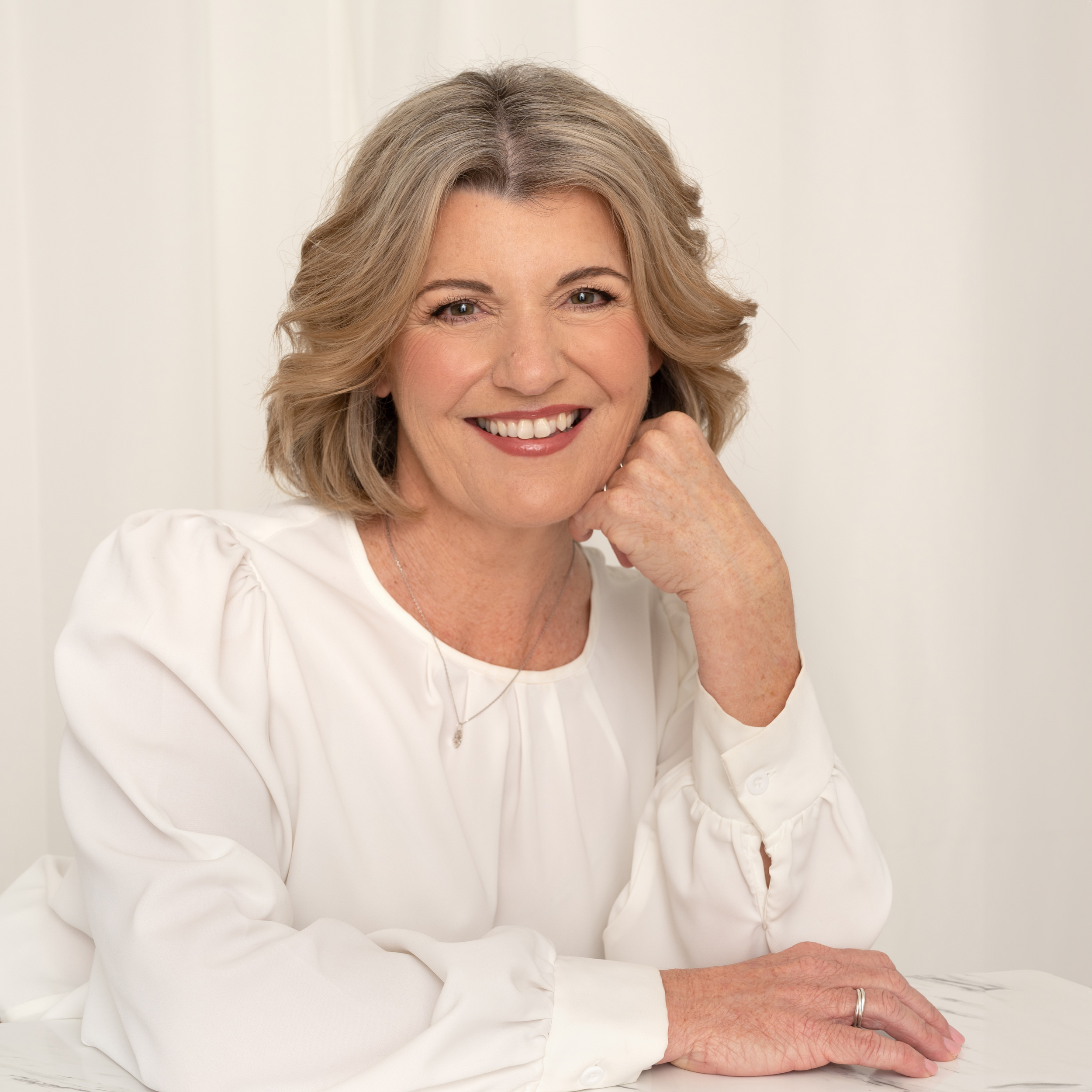
Sallyanne Keevers is a PACFA Clinical Member and Registered Supervisor, and an ACA Level 2 Member and Registered Supervisor, based in Queensland, Australia. She specialises in IFS, Brainspotting, and trauma-informed depth psychotherapy for women, and offers clinical supervision for counsellors and psychotherapists. Sallyanne works exclusively online with women across Australia and internationally.