

Brainspotting for anxiety is not another technique for managing anxious thoughts. It is not a breathing protocol or a cognitive reframe. It works at a different level entirely: below the thinking mind, in the nervous system, where chronic anxiety is actually stored.
For women with high-functioning anxiety, this distinction matters. They have usually tried the cognitive approaches. They understand their anxiety, they know the thoughts are distorted, they have the tools. And still the anxiety is there: in the body, in the background, in the bracing that never quite switches off.
Brainspotting for anxiety offers a way to access and process the physiological activation underneath the pattern, not by thinking it through differently, but by allowing the brain and body to process it directly.
Why Anxiety Lives in the Body, Not Just the Mind
Anxiety is not purely a thinking problem. While anxious thoughts are the most visible symptom, they are often the surface expression of something deeper: a nervous system that has learned to stay on alert, a body that is carrying activation it has not been able to discharge.
This is why cognitive approaches work up to a point for many women and then plateau. Changing the thought does not necessarily change the underlying physiological state. You can know your anxiety is irrational and still feel it in your chest. You can understand exactly where it came from and still wake at three in the morning with your heart already racing.
The body is not responding to the present moment. It is responding to a learned pattern, one that was shaped by past experience and held in the nervous system long after the circumstances that created it have changed.
How Brainspotting for Anxiety Works
In a Brainspotting session focused on anxiety, the work begins with the body. The therapist will ask the client to notice where they feel the anxiety physically: the tightness in the throat, the constriction in the chest, the low hum of dread in the belly. That body sensation becomes the anchor.
From there, the therapist slowly moves a pointer across the visual field while the client stays connected to the body sensation. At certain eye positions, there is a response: a deepening of the sensation, a shift in breathing, a reflexive blink. That is the brainspot: the eye position that most activates the material.
Once the brainspot is located, the client holds that gaze position while staying with whatever arises. The therapist holds the space, present and attuned, but not directing what happens. The processing is the client’s own. What unfolds from there varies: sensation moving through the body, emotion arising and passing, a gradual settling of the activation.
The theoretical framework proposes that this process accesses brain structures involved in emotional memory and threat response that sit beneath conscious thought. As with all aspects of the Brainspotting model, this remains a working hypothesis rather than established neuroscience, but the clinical outcomes for anxiety are consistently encouraging.
What Makes Brainspotting Different from Other Anxiety Treatments
Most anxiety treatments work top-down, starting with thoughts and behaviour, and working toward the body. CBT identifies distorted thinking and offers alternative frames. Mindfulness builds the capacity to observe anxiety without being overwhelmed by it. These are valuable and well-evidenced approaches.
Brainspotting works bottom-up, starting with the body and the nervous system, and allowing processing to move upward from there. It does not require the client to find the right words, make cognitive sense of the experience, or construct a narrative about what happened. The processing occurs at a level beneath language.
For women who have done significant cognitive work and still carry anxiety in the body, this shift in direction is often exactly what has been missing. The head has done its work. The body needs something different.
High-Functioning Anxiety and Brainspotting
High-functioning anxiety has a particular quality that makes it both hard to treat and hard to name. Everything looks fine from the outside. The woman is achieving, managing, holding things together. But internally there is a constant vigilance, a bracing, a difficulty ever truly resting, even in the absence of any actual threat.
This kind of anxiety tends to be held in the body as a chronic state of readiness. The nervous system has learned that relaxing is not safe, that something might go wrong if the guard comes down. Cognitive approaches can provide relief and coping strategies, but they often cannot reach the physiological state itself.
Brainspotting for anxiety works well for this presentation because it does not ask the anxious system to think differently. It meets the body where it is and allows processing to happen at the level where the anxiety actually lives.
Combining Brainspotting and IFS for Anxiety
In practice, Brainspotting for anxiety often works alongside Internal Family Systems therapy. IFS helps identify and build relationship with the parts driving the anxiety: the part that is always scanning for danger, the inner critic, the part that cannot stop anticipating what might go wrong. It provides the psychological understanding of what the anxiety is protecting.
Brainspotting then processes what those parts are holding in the body. The two approaches work at different levels and complement each other well, IFS addressing the inner relational landscape, Brainspotting processing the stored physiological activation underneath it.
For many women with high-functioning anxiety, this combination produces a quality of change that neither approach delivers alone: an easing of the internal pressure that feels genuinely different from anxiety management.
Frequently Asked Questions
Can Brainspotting help with anxiety that is not related to a specific trauma?
Yes. Brainspotting is not only for identifiable traumatic events. Chronic anxiety, generalised anxiety, and high-functioning anxiety all involve stored physiological activation that Brainspotting can reach, regardless of whether there is a specific incident at the root. Many women find it effective for diffuse anxiety that has no clear single cause.
How many sessions of Brainspotting does it take to help with anxiety?
This varies. Some women notice a meaningful shift within a few sessions. For chronic or complex anxiety with a long history, the work tends to unfold over a longer period. Brainspotting is typically used as part of an ongoing therapeutic relationship rather than a brief standalone intervention.
Will Brainspotting make my anxiety worse before it gets better?
It is possible to feel stirred up after a session, particularly in the early stages of the work. This is why pacing is important: Brainspotting is always titrated to what the nervous system can tolerate, and stabilisation is prioritised before deeper processing begins. If something feels like too much, sessions can be slowed or redirected.
Is Brainspotting for anxiety available online in Australia?
Yes. Brainspotting works well online and is accessible to women across Australia via secure video call. The pointer work is adapted for screen use, and the depth of the work is not diminished by the online format.
If Your Anxiety Lives in the Body, There Is Work for That
If you recognise the anxiety described here (the kind that cognitive tools have not been able to fully reach), I would welcome a conversation. I work exclusively with women, fully online, using Brainspotting alongside IFS to work with anxiety at the level where it actually lives.
You can read more about how I work on my approach page. When you are ready, get in touch directly to ask a question or enquire about availability. I aim to respond to all enquiries within two business days.
Understanding your anxiety was never going to be enough on its own. The body needs something more than an explanation.
Further Reading
- Brainspotting Therapy Australia: What It Is and How It Is Used
- What Is Brainspotting? A Guide for Women Considering Trauma Therapy
- How IFS Therapy Helps High-Functioning Anxiety
- High-Functioning Anxiety in Women: Why You’re Successful but Always On Edge
- Brainspotting for Trauma: Why Some Healing Needs to Happen Below Language
Not sure yet whether therapy is right for you? You are welcome to book a free 15-minute chat, or ask me a question.
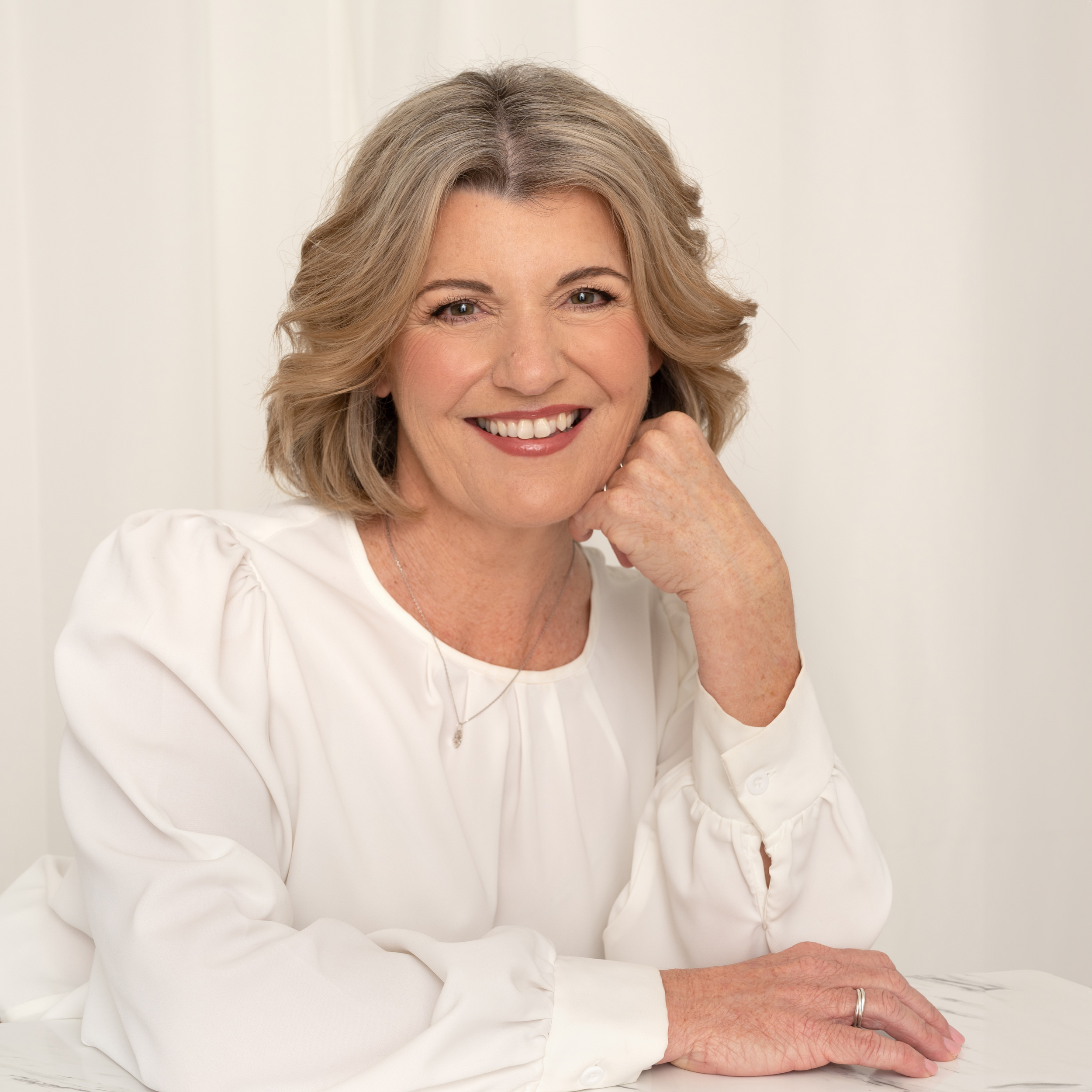
Sallyanne Keevers is a PACFA Clinical Member and Registered Supervisor, and an ACA Level 2 Member and Registered Supervisor, based in Queensland, Australia. She specialises in IFS, Brainspotting, and trauma-informed depth psychotherapy for women, and offers clinical supervision for counsellors and psychotherapists. Sallyanne works exclusively online with women across Australia and internationally.