

What is Brainspotting? It is one of the most common questions I hear from women who have been referred to me, or who have found their way here through their own research. They have heard the term, they are curious, and they want an honest answer before they decide whether it is something they want to try.
So here it is: a clear, plain-language answer to what Brainspotting is, how it works in practice, and what it might offer you if you are carrying something that talking alone has not been able to move.
What Is Brainspotting: The Simple Answer
Brainspotting is a therapy approach developed by American psychotherapist Dr David Grand in 2003. It is based on the observation that where you look affects how you feel, and that specific positions in the visual field appear to correlate with stored trauma, emotional activation, and unprocessed experience.
In a Brainspotting session, a therapist helps you locate what is called a brainspot: an eye position that activates the material you are working on. Once that position is found, you hold your gaze there while staying with whatever arises internally: sensations, emotions, images, or simply a physical sense of something shifting. The therapist stays present and attuned throughout, but does not direct or interpret what happens. The processing is yours.
The theoretical framework suggests that this process accesses brain structures involved in emotional memory and trauma that are not easily reached through language and conscious thought alone. It is important to be clear that this remains a working hypothesis: the precise neurological mechanism has not been definitively established. What is established, through clinical experience and a growing body of research, is that many people find it produces a quality of change that other approaches have not.
Where Did Brainspotting Come From?
David Grand developed Brainspotting from his work with EMDR (Eye Movement Desensitization and Reprocessing), another eye-position-based trauma therapy. During an EMDR session with a client, he noticed that when her eye position reached a specific point, she had a significant therapeutic breakthrough. He began to investigate whether eye position itself was carrying information, and Brainspotting grew from that observation.
Since 2003, Brainspotting has been taken up by therapists internationally and used across a wide range of presentations, from single-incident trauma through to complex trauma, anxiety, burnout, grief, and performance blocks. It is now taught across multiple training phases and used by practitioners in many countries, including Australia.
What Does a Brainspotting Session Actually Involve?
Sessions begin with settling: slowing down, noticing what is present in the body, and identifying what you are bringing to work on. From there, I will ask you to locate where you feel the activation in your body, and we will use that as an anchor for finding the brainspot.
Finding the brainspot involves slowly moving a pointer across your visual field while you stay connected to the body sensation. At certain points, there will be a response: a blink, a shift in breathing, an increase or decrease in activation. That is where we stop. That is the brainspot.
Once located, you hold your gaze at that position and simply stay with what is there. There is no need to narrate, analyse, or make sense of what arises. I stay present and attuned, tracking what I observe externally while you follow what is happening internally.
Sessions typically run for 50 to 60 minutes. Online sessions work well: the pointer is adapted to a screen pointer, and the depth of the work is not diminished by the online format in my experience.
What Does Brainspotting Feel Like from the Inside?
This is the question I find most useful to answer honestly, because expectations can significantly affect how someone approaches a first session.
Brainspotting sessions are often quieter than people expect. There is a focused, inward quality that can feel a little like deep concentration or meditation, though you are fully conscious and in control throughout. Nothing is being done to you. The processing is happening inside your own system, at its own pace.
What people notice varies. Some experience a gradual movement of sensation through the body: warmth, tingling, a sense of something releasing. Others notice emotions arising and passing. Some experience imagery or memories. Some simply feel a slow settling, without being able to name what shifted. All of these are valid. There is no right way for a Brainspotting session to unfold.
What clients most consistently report is that something moves that has not moved before. Not dramatically, and not all at once, but in a way that feels real and different from anything they have experienced in more cognitive approaches.
Who Is Brainspotting For?
Brainspotting tends to suit women who are ready to work at a body level, not just a cognitive one. You do not need to have experienced identifiable trauma to benefit. Many of the women I work with come with chronic anxiety, burnout, emotional patterns that persist despite good self-awareness, or a felt sense that something is held in the body that talking has never quite reached.
It works particularly well for women who are psychologically minded but have found purely cognitive approaches incomplete. If you understand yourself well and still feel stuck in the body, Brainspotting may be what has been missing.
It is also well-suited to women who have found other trauma therapies helpful but not quite enough, or who struggled with the more structured format of EMDR. Brainspotting is more open and less protocol-driven, which many clients find easier to settle into.
Brainspotting and IFS: How I Use Them Together
In my practice I use Brainspotting alongside Internal Family Systems therapy. IFS provides the relational and psychological scaffolding, helping you understand the inner parts that carry your patterns, what they are protecting, and what they need. Brainspotting provides the somatic depth, processing what those parts are holding in the body and brain at a level that language alone cannot reach.
Not every session uses both. Sometimes the work is primarily IFS. Sometimes it is primarily Brainspotting. Often the two weave together naturally within a session. I follow what the work needs rather than applying a fixed formula.
Frequently Asked Questions
Is Brainspotting the same as EMDR?
No, though they share roots. Both involve eye position and were developed from related observations. EMDR uses bilateral stimulation and a structured protocol. Brainspotting uses a fixed eye position and is less directive: the therapist locates the brainspot and then largely holds space while the client’s system processes. Many clients describe Brainspotting as feeling less effortful and more organic than EMDR, though both can be effective.
Do I need to talk about my trauma in a Brainspotting session?
No. One of Brainspotting’s distinctive features is that it does not require a narrative. You do not need to describe what happened in detail, find the right words for your experience, or construct a coherent account of your history. The processing happens below the level of language, which is part of why it can reach material that talking has not.
Can Brainspotting make things worse?
Any trauma-informed therapy can stir things up if moved too quickly. Brainspotting is designed to be titrated, paced carefully to what the nervous system can tolerate. I always work with stabilisation before processing, and the approach respects the protective parts of the system rather than bypassing them. If something feels like too much in a session, we slow down or stop.
Is Brainspotting available online?
Yes. I offer Brainspotting online via secure video call. The pointer work is adapted for screen, and in my experience the depth and effectiveness of the sessions is not diminished. Online access also means women across Australia can work with a Brainspotting practitioner without being limited by geography.
Ready to Find Out if Brainspotting Is Right for You?
If you are curious about Brainspotting and wondering whether it might be the right next step, I would welcome a conversation. I work exclusively with women, fully online, using Brainspotting alongside IFS to work at the level where patterns, trauma, and emotional activation actually live.
You can read more about how I work on my approach page. When you are ready, get in touch directly to ask a question or enquire about availability. I aim to respond to all enquiries within two business days.
You do not have to fully understand it before you try it. Most people find that the first session answers the question better than any explanation could.
Further Reading
- Brainspotting Therapy Australia: What It Is and How It Is Used
- Brainspotting for Anxiety: When the Activation Lives in the Body
- Brainspotting for Trauma: Why Some Healing Needs to Happen Below Language
- IFS Therapy in Australia: A Guide for Women Who Are Ready to Go Deeper
- When Self-Awareness Is Not Enough: How IFS Therapy Goes Deeper
Not sure yet whether therapy is right for you? You are welcome to book a free 15-minute chat, or ask me a question.
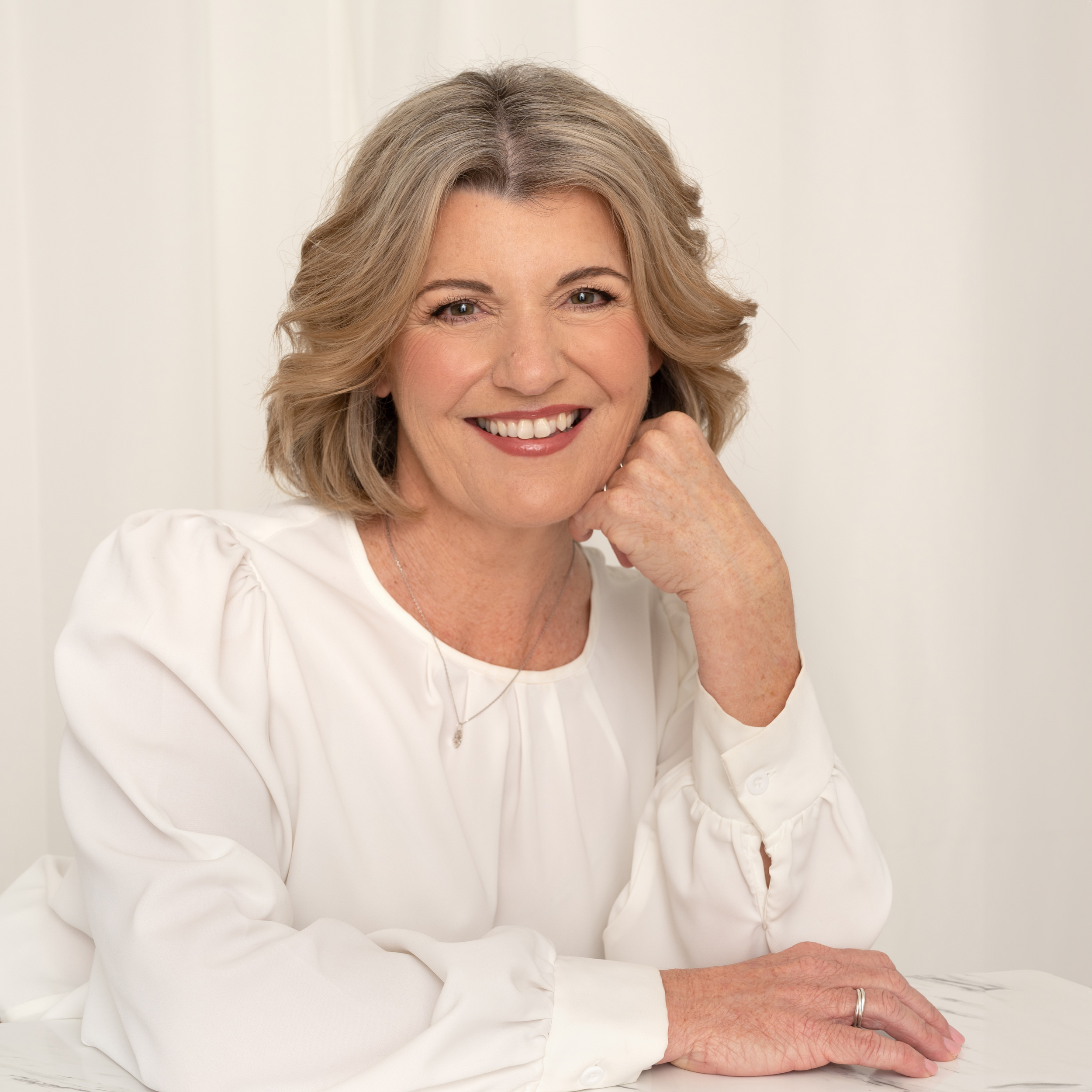
Sallyanne Keevers is a PACFA Clinical Member and Registered Supervisor, and an ACA Level 2 Member and Registered Supervisor, based in Queensland, Australia. She specialises in IFS, Brainspotting, and trauma-informed depth psychotherapy for women, and offers clinical supervision for counsellors and psychotherapists. Sallyanne works exclusively online with women across Australia and internationally.