
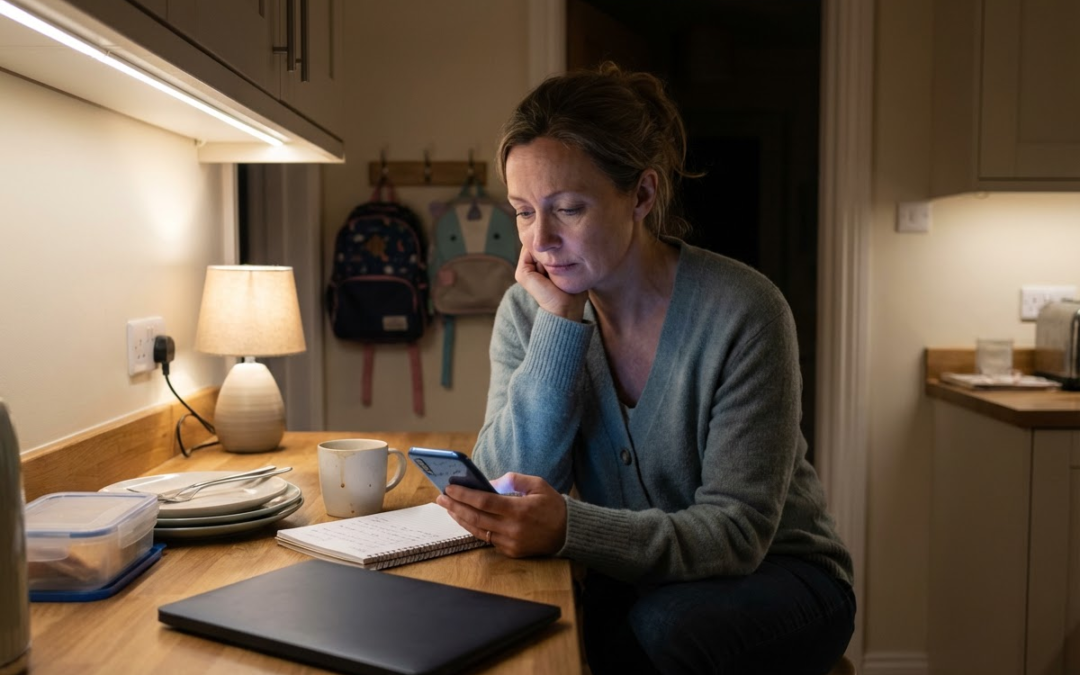
The signs of emotional burnout in women are rarely dramatic.
You may still be functioning. Still showing up. Still holding everything together.
From the outside, nothing looks wrong.
But underneath, something feels thinner. More brittle. Harder to access.
Emotional burnout in women often hides behind competence. It builds quietly through responsibility, emotional labour, invisible planning, and the expectation that you will manage not just tasks, but tone, tension, and togetherness.
If you have been feeling “off” but cannot quite name why, these subtle signs may help you recognise what is happening.
1. You Feel Irritable More Than You Used To
You are not an angry person. But lately, small things grate.
Requests that once felt manageable now feel intrusive. Noise feels sharper. Interruptions feel personal.
Irritability is often one of the early signs of emotional burnout in women. When your nervous system has been in long-term activation, it has less room for flexibility. You are not failing. You are depleted.
Beyond Blue notes that chronic stress and emotional overload can present as irritability, fatigue, and anxiety.
2. Small Requests Feel Overwhelming
Someone asks a simple question and your body reacts as if it is one more weight on an already full shelf.
You may be carrying what is often described as the invisible mental load. Tracking appointments. Anticipating needs. Remembering birthdays. Planning ahead.
If that sounds familiar, you may want to read my article on invisible mental load for women, where I explore how constant anticipation becomes exhausting.
Burnout is not always about doing too much physically. It is often about thinking too much, for too many people, for too long.
3. You Fantasise About Escaping
Not dramatically. Just quietly.
You imagine a hotel room alone. A week with no one asking anything of you. Silence.
This is not selfishness. It is often your nervous system signalling that it needs space.
When emotional labour has been constant, your system craves relief from being the organiser, mediator, and emotional regulator.
4. You Feel Emotionally Numb
Instead of overwhelm, you feel flat.
Things that once moved you feel distant. Conversations feel effortful. Joy feels muted.
Emotional burnout in women does not always look like tears. Sometimes it looks like a subtle withdrawal.
The nervous system can move into a protective “shut down” state when it has been overextended for too long.
5. You Resent People You Love
Resentment can be one of the clearest signs of emotional burnout in women.
You notice a growing edge in yourself. A quiet tallying. A sense that you are carrying more than others realise.
If this resonates, you might find it helpful to read Why Do I Feel Resentful in My Relationship?, where I explore how resentment often signals imbalance rather than incompatibility.
Resentment is rarely random. It usually points to load.
6. Rest Does Not Restore You
You go to bed earlier. You take a day off. You try to rest.
But the exhaustion remains.
When burnout is emotional and relational, sleep alone does not resolve it. If your mind continues scanning, planning, or anticipating, your body never truly powers down.
You may also relate to Why Am I So Tired Emotionally? When Nothing Is “Wrong” but You Feel Drained, which explores this deeper fatigue.
7. You Feel Alone in Responsibility
You are the one who remembers. The one who organises. The one who holds the emotional centre of gravity.
Even in partnership, you feel alone in the background work.
This overlaps with emotional labour in relationships, where one person becomes responsible for managing the atmosphere and emotional tone.
Burnout grows when responsibility is invisible and unshared.
8. You Question Whether You Are “Too Sensitive”
You minimise your own strain.
Other people cope. Other women manage. Maybe you are just not resilient enough.
But emotional burnout in women does not happen in isolation. It happens within systems. Gendered expectations. Cultural norms. Patterns where care work becomes assumed rather than acknowledged.
Your sensitivity may actually be awareness.
9. You Feel Done — But Do Not Know What Needs to Change
You cannot pinpoint a single problem.
You just feel… done.
Relational burnout in women often emerges this way. Not through one dramatic rupture, but through years of small imbalances that accumulate.
If this feels familiar, you may want to read Relational Burnout in Women: When You Feel Done.
Burnout is often not about love disappearing. It is about capacity thinning.
Why Emotional Burnout in Women Builds Slowly
Emotional burnout in women tends to develop gradually because the behaviours that create it are often praised.
You are reliable. Capable. Organised. Selfless.
Over-functioning can feel virtuous. Emotional labour can feel necessary. The invisible mental load can feel like simply being competent.
But when responsibility is chronically uneven, the nervous system adapts to constant activation. Over time, that activation becomes depletion.
Burnout is not a personal flaw. It is often the predictable outcome of sustained emotional and relational over-extension.
If You Recognise These Signs
If you see yourself in several of these signs of emotional burnout in women, it does not mean you are weak.
It may mean you have been strong for too long without adequate support.
Therapy offers a space where you do not have to manage anyone else’s emotions. A space to explore what you have been carrying, how those patterns formed, and what might need to shift.
You can learn more about working with me here.
Or you are welcome to get in touch here.
You do not have to keep holding everything together alone.
Frequently Asked Questions
What are the signs of emotional burnout in women?
The signs of emotional burnout in women often include irritability, emotional numbness, resentment, fatigue that does not resolve with rest, feeling alone in responsibility, and fantasising about escape. Burnout builds gradually and is often linked to sustained emotional labour and invisible mental load.
How is emotional burnout different from depression?
Emotional burnout is typically linked to prolonged stress and over-responsibility. It often improves when load shifts. Depression can involve broader changes in mood, sleep, appetite, and motivation that are not solely linked to situational stress. If you are unsure, speaking with a qualified professional can help clarify what you are experiencing.
Can emotional labour cause burnout?
Yes. When one person consistently manages the emotional tone of relationships, anticipates needs, and smooths tension without reciprocity, emotional labour can contribute significantly to burnout.
How do I recover from emotional burnout?
Recovery usually involves reducing load, increasing support, examining relational patterns, and allowing space for your own emotional needs. Therapy can help you understand how these patterns developed and how to shift them safely and sustainably.